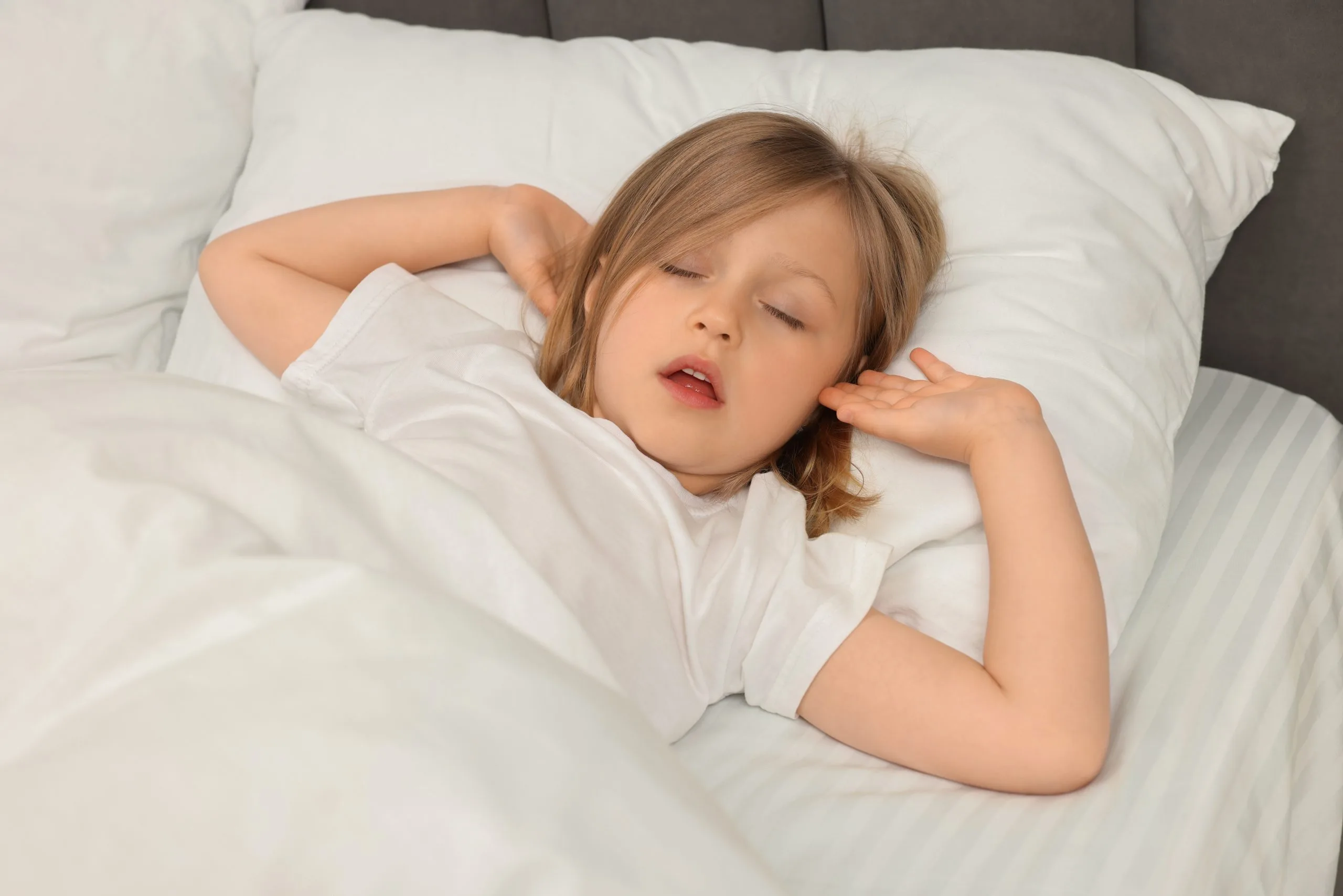
You should worry about your child’s snoring when it happens most nights, comes with gasping, choking, or pauses in breathing, or when your child seems tired, cranky, or unfocused during the day. Occasional quiet snoring during a cold is usually harmless, but loud, frequent snoring paired with these warning signs can indicate a sleep-breathing problem, such as obstructive sleep apnea, that warrants evaluation by an ENT specialist.
Knowing when to worry about child snoring helps you catch issues early and protect your child’s sleep, growth, and daily well-being.
Many children snore now and then, especially when they have a cold or allergies, and most of the time it is nothing serious. Snoring happens when air can’t move smoothly through the nose and throat, causing the tissue to vibrate. The key is understanding the difference between simple, occasional snoring and chronic, problematic snoring that disrupts sleep quality.
Normal or “simple” snoring is usually soft, light, and infrequent. You might hear it when your child has a stuffy nose from a cold or during allergy season. The sound is a light fluttering – not a loud, rattling noise heard from another room – and your child wakes up rested and acts like their usual self.
Yes. Babies and newborns have small, narrow nasal passages that can easily become partially blocked by mucus or swelling, so they often make snuffly, snorting sounds while they sleep. This is usually temporary and improves as they grow. Still, if a baby’s snoring is persistent, they struggle to breathe, feed poorly, or turn blue around the lips, call a doctor right away.
Snoring is generally considered normal when:
It’s quiet and soft.
It happens only occasionally, such as during a cold or allergy season.
The child has no other symptoms, like gasping or daytime sleepiness.
It doesn’t disrupt their sleep or the sleep of others in the household.
Nasal congestion: A stuffy nose from a common cold, flu, upper respiratory infection, or sinus infection.
Allergies: Seasonal or environmental allergies that cause inflammation of the nasal passages and throat.
Dry air: A stuffy or dry bedroom can irritate the airway.
Sleeping position: Certain positions can cause the tongue to fall back and partially block the airway.
These causes usually fade once the illness or trigger passes.
Parents are often the first to notice something is wrong. Pay close attention if the snoring is nightly, harsh, or seems to interrupt your child’s breathing.
Loud snoring three or more nights per week
Gasping, choking, or snorting sounds
Pauses in breathing (apnea) followed by a catch-up breath
Restless sleep with frequent waking, tossing, and turning
Unusual sleeping positions, such as the head propped up or neck stretched back
Chronic mouth breathing or heavy sweating during sleep
Bedwetting that returns after your child was previously dry
Difficulty waking up or excessive sleepiness, sometimes mistaken for laziness
Morning headaches
Irritability, mood swings, or hyperactivity
Difficulty concentrating and behavioral problems that can mimic ADHD
Poor performance or learning difficulties at school
Mouth breathing during the day
Sleep problems in children don’t always look like tiredness – sometimes they look like behavior issues, which is why these daytime clues matter so much.
The biggest red flag is when snoring comes with pauses in breathing. This can signal obstructive sleep apnea, where the airway repeatedly narrows or closes during sleep, causing the child to momentarily stop breathing. These episodes can happen many times per hour, severely disrupting sleep quality. If you hear your child stop breathing, gasp for air, or wake up struggling, it’s time to seek an evaluation.
When sleep apnea goes untreated, a child’s body doesn’t get the deep, restful sleep it needs. Over time, this can affect:
Growth and development
Attention, memory, and learning
Mood and behavior
Heart and overall cardiovascular health
The good news is that these effects can often be reversed once the underlying breathing problem is addressed.
If your child snores, don’t panic – but do pay attention. Start by tracking how often it happens and whether any warning signs come with it.
For mild, occasional snoring tied to congestion, a few steps may help:
Use a cool-mist humidifier to keep the air moist and soothe irritated airways
Elevate the head of the bed slightly to help keep the airway open
Keep the bedroom free of dust, pet dander, and smoke, and reduce allergen exposure
Treat allergies and colds promptly
Encourage healthy sleep habits and a consistent bedtime
Keep your child at a healthy weight
Schedule an appointment with an ear, nose, and throat (ENT) specialist if your child:
Snores loudly most nights of the week
Has any of the nighttime or daytime red-flag symptoms above
Struggles with chronic mouth breathing or breathing pauses
Occasional, quiet snoring is usually harmless, but loud, nightly snoring – especially with gasping, breathing pauses, or daytime tiredness – should never be ignored. Understanding when to worry about child snoring empowers you to protect your child’s rest, health, and growth. If your child’s breathing during sleep concerns you, seek evaluation to ensure healthy sleep and well-being.

About the Author
Vincent Pisciotta
Dr. Pisciotta brings decades of ENT expertise, with advanced training at LSU and MD Anderson Cancer Center. He is recognized for his leadership and contributions to otolaryngology.